
ASTANA — Kazakhstan has received the least restrictive travel advisory level from the United States, adding to a series of developments leading to strengthening the country’s position as an international tourism destination.
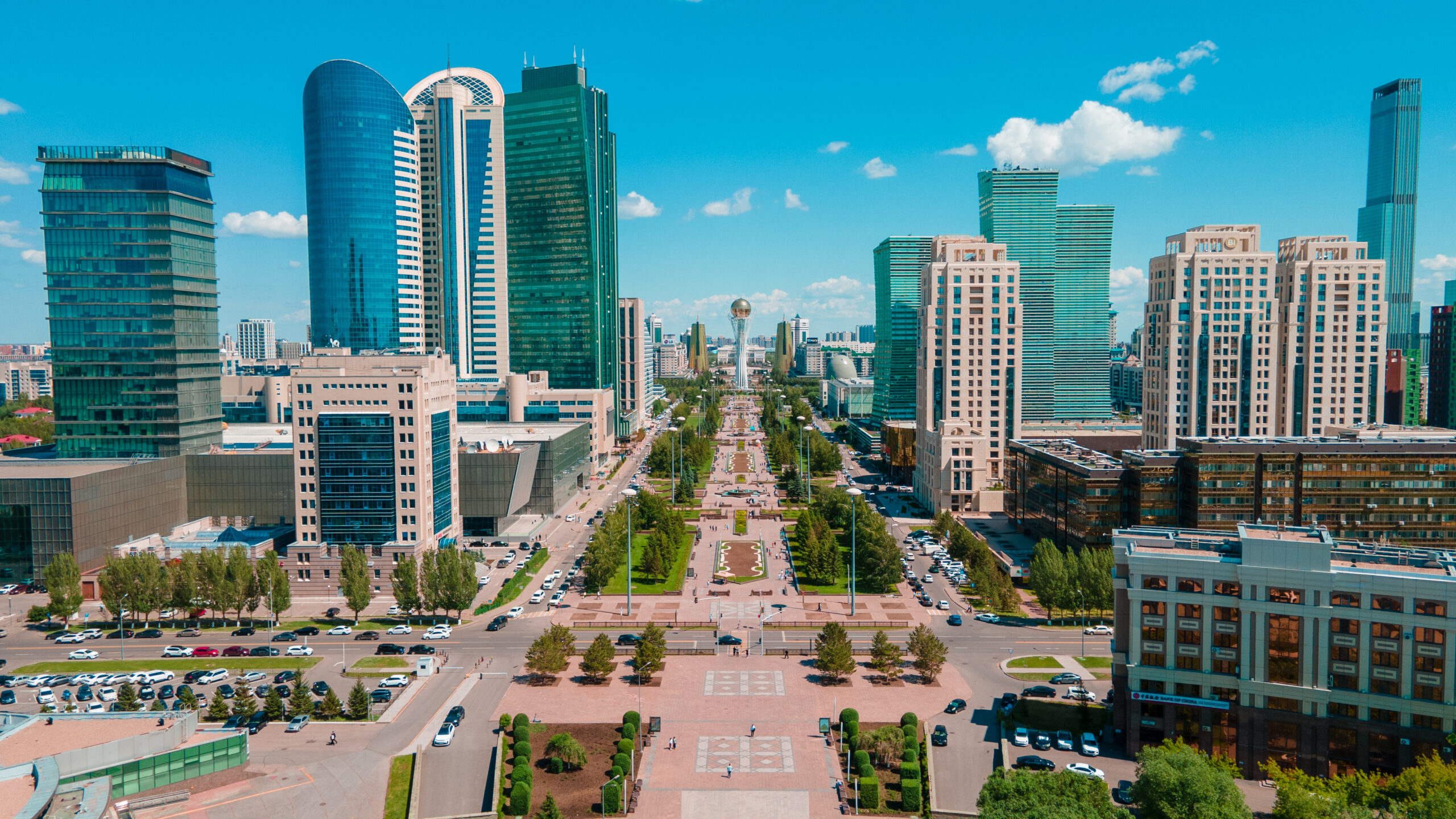
Astana. Photo credit: The Astana Times.
On Aug. 18, the U.S. Department of State placed Kazakhstan at Level 1, the lowest (safest) of its four travel advisory levels. The advisory says Kazakhstan is generally a safe destination for travelers, while noting that flooding can occur in the country.
The assessment comes as Kazakhstan continues to expand its tourism infrastructure, international connectivity and number of tourists.
According to the Bureau of National Statistics, Kazakhstan received 15.7 million foreign visitors in 2025, 3.1% more than in 2024. Of these, 11.1 million were classified as foreign tourists. Tourism investment reached 1.26 trillion tenge (US$2.4 billion), increasing by 32.6% year on year.
The positive trend continued in the first quarter of 2026, when Kazakhstan welcomed three million foreign travelers. More than two million guests stayed at accommodation facilities, including more than 802,000 visitors to resort areas.
The Almaty Mountain Cluster was the most visited resort destination during the period, followed by the Shchuchinsk-Burabai resort area in the Akmola Region and the Mangystau resort area.
Kazakhstan also improved its position in the World Economic Forum’s Travel & Tourism Development Index, ranking 52nd among 119 economies in the 2024 edition, compared with 66th among 117 economies in the previous edition.
The country is also investing in transport infrastructure to make major tourist destinations more accessible. Kazakhstan plans to open or resume 15 international air routes in 2026, including services connecting the country with Vienna, Rome, Shanghai, Tokyo and Riyadh. Domestic connectivity is also being expanded.
The government is working to complete tourist airports in Katon-Karagai and Zaysan in eastern Kazakhstan and Kenderli in the Mangystau Region in 2026. Road improvements include routes leading to major tourist destinations, while new roadside service facilities are also planned. The Astana Times previously reported on measures to improve safety, transport and resort infrastructure ahead of the 2026 summer season.
Nature-based tourism is becoming one of the country’s key areas for development.
The Almaty Superski project is being implemented as part of the broader Almaty Mountain Cluster. The project is expected to expand access to mountain tourism and create infrastructure for skiing, hiking and other outdoor activities.
Visits to specially protected natural areas increased from 2.8 million in 2024 to 3.7 million in 2025, according to the Ministry of Tourism and Sports. National parks currently offer 179 tourist routes and 42 ecological trails.
Officials have emphasized that tourism development should be balanced with environmental protection, including ecological monitoring and visitor management.
Another indicator of Kazakhstan’s growing integration into international travel is the Henley Passport Index.
In the 2026 Henley Passport Index, Kazakhstan ranked 64th, with its passport providing access to 77 destinations without a prior visa. The Henley Passport Index measures international mobility, the number of destinations that passport holders can access without obtaining a visa in advance. It is separate from travel safety assessments.
Kazakhstan is also expanding opportunities for foreign travelers to enter the country.
Citizens of 105 countries can obtain electronic visas, while Kazakhstan has introduced additional visa mechanisms for certain categories of visitors, including the Digital Nomad Visa for IT specialists and the Neo Nomad Visa.
International arrivals are only part of Kazakhstan’s tourism market. Domestic travel continues to account for the majority of tourism trips by citizens.
According to the Bureau of National Statistics, Kazakhstan recorded 11.77 million tourist trips by citizens in 2025. Of these, 10.27 million, or 87.2%, were domestic trips.
Astana, the Turkistan Region and Almaty were among the most visited destinations, highlighting the importance of both major cities and regional tourism centers.
The new U.S. travel advisory is one of several developments strengthening Kazakhstan’s international tourism profile. Growing visitor numbers, rising investment, new air routes, improved access to regional destinations, simplified visa procedures and expanding mountain and nature tourism are collectively making the country more accessible to international travelers.
For Kazakhstan, the next challenge will be to ensure that tourism growth is accompanied by reliable services, safety measures and environmental protection.
The combination of a favorable safety assessment and expanding tourism infrastructure could further strengthen Kazakhstan’s position as a destination for travelers interested in nature, adventure, cultural heritage and the wider Central Asian region.
