
Editor’s note: This article is published as part of a partnership agreement between The Astana Times and The Korea Times. A special series seeks to provide readers with in-depth insights into the opportunities, challenges, and trends linking our two countries.
ASTANA – More Kazakh students are looking to South Korea as a destination for higher education, and a new university ranking by The Korea Times highlights opportunities beyond the country’s leading universities. The Korea Times University Rankings 2027 found that several universities outside the capital region performed strongly in areas including education, student support and graduate outcomes.
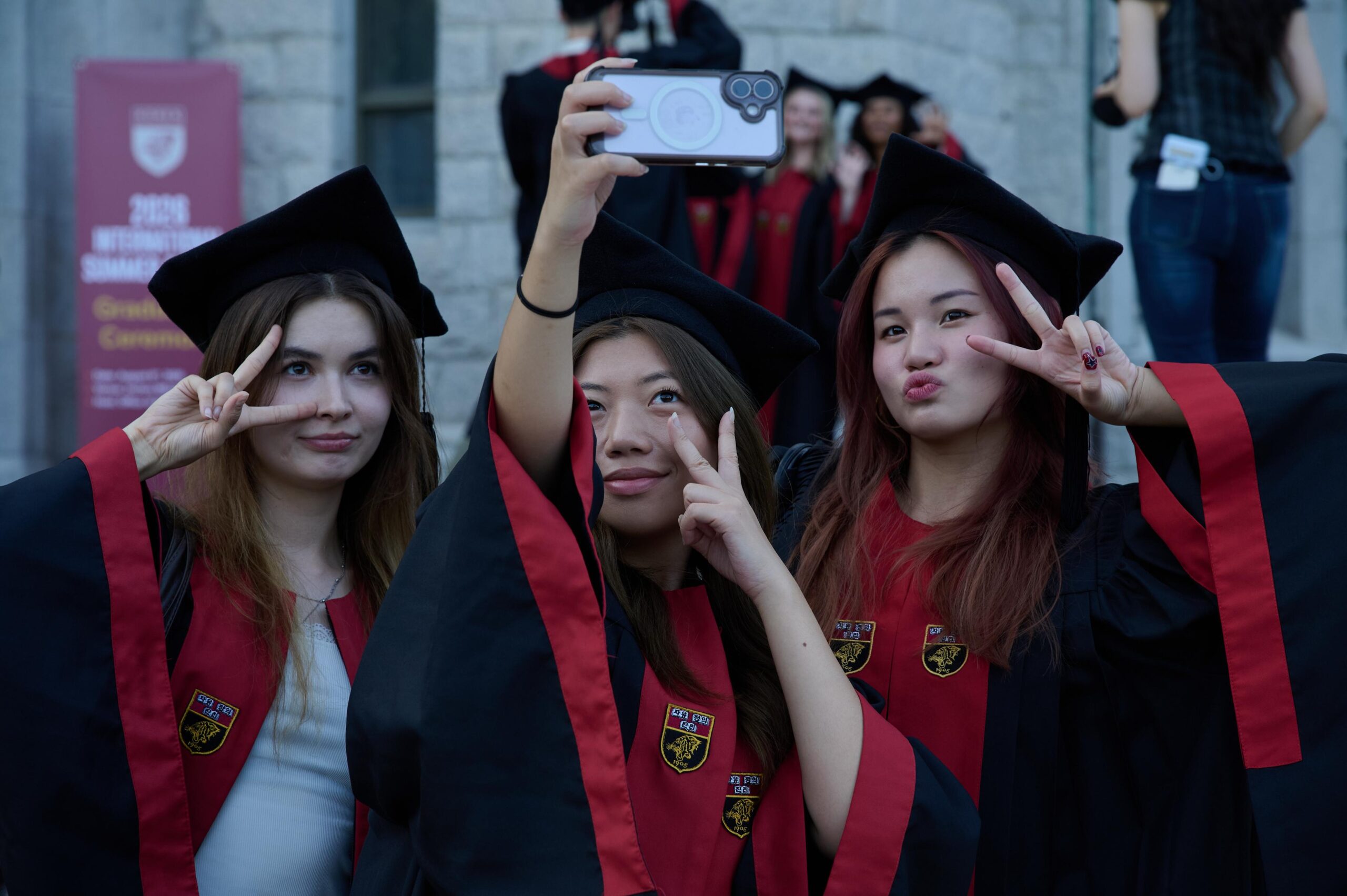
Korea University students pose during a graduation ceremony on the university’s campus in Seongbuk District, Seoul. Courtesy of Korea University. Photo credit: The Korea Times
First launched last year, the rankings assess how universities are building a broader ecosystem for international students rather than focusing solely on the number of foreign students they attract.
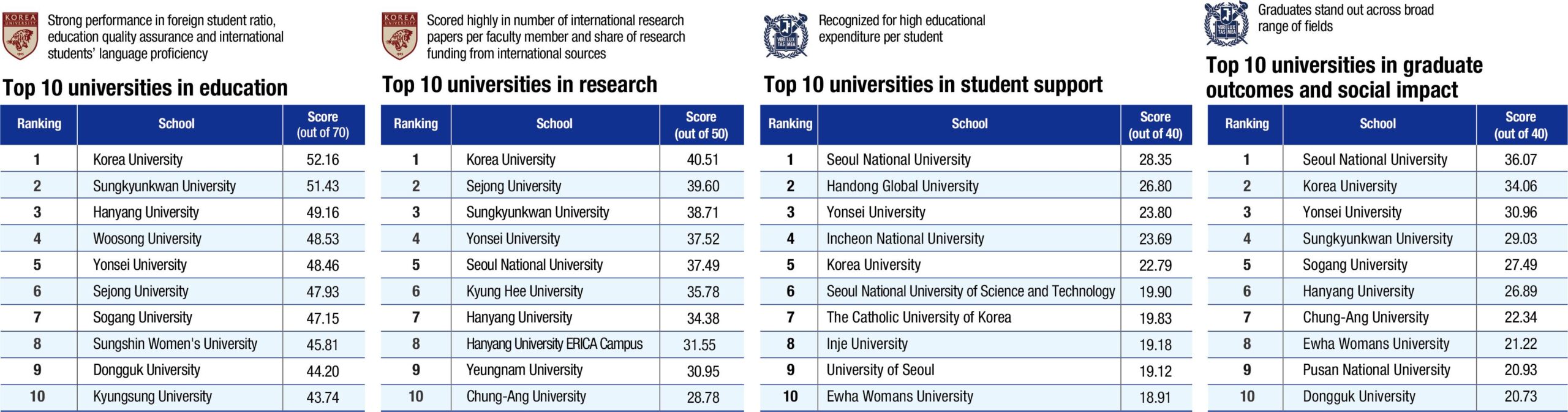
This year’s evaluation used 19 indicators across four categories, including education, research, student support and graduate outcomes. Photo credit: The Korea Times
This year’s assessment covered 60 four-year universities nationwide. The evaluation used 19 indicators across four categories, including education, research, student support and graduate outcomes, for a total of 200 points. The rankings are intended to help international students make more informed choices about studying in Korea.
Seoul universities lead overall rankings
Korea University, Seoul National University and Yonsei University, collectively known as the country’s SKY universities, retained the top three positions in the overall top 30.
Korea University ranked first with 149.52 points out of 200, followed by Seoul National University with 142.22 and Yonsei University with 140.74. Sungkyunkwan University, Hanyang University and Sogang University completed the top six, with all six maintaining their positions from last year. Sejong University moved up six places to seventh, entering the top 10.
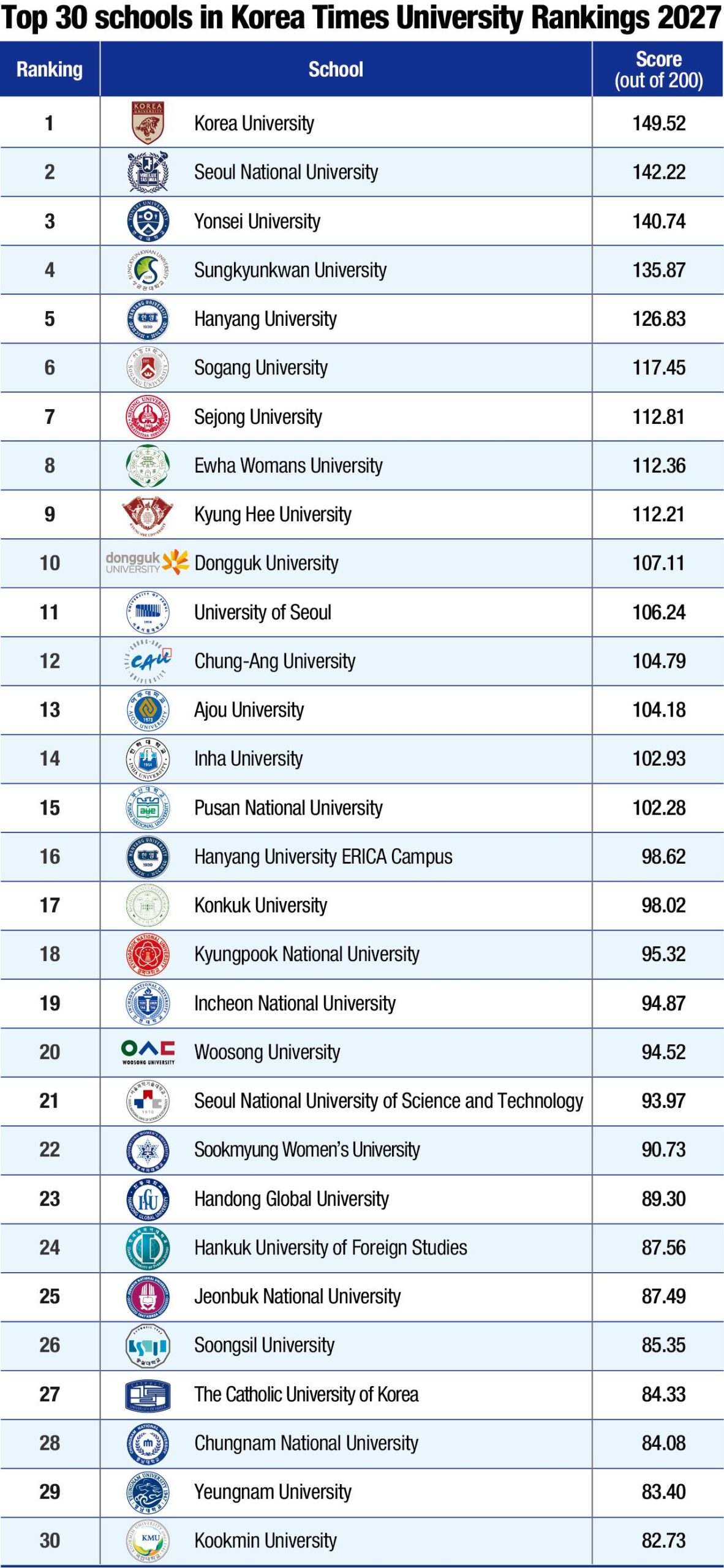
Top 30 Universities in The Korea Times University Rankings 2027. Photo credit: The Korea Times
Seoul-based private universities continued to dominate the overall top 30. However, seven universities outside the capital region also made the list, including Pusan National University, Kyungpook National University, Jeonbuk National University and Chungnam National University, as well as Woosong University, Handong Global University and Yeungnam University.
Yeungnam University and Kookmin University were the only newcomers to the top 30, rising three and four places from 32nd and 34th last year to 29th and 30th, respectively.
The results also point to a continuing regional gap in university internationalization. Of the 30 universities recognized for excellence in globalization, 23 were located in Seoul, Gyeonggi Province, or Incheon, while seven were based elsewhere.
At the same time, several regional and smaller universities performed strongly in individual categories, including education, student support and graduate outcomes. They included Handong Global University, Incheon National University, Woosong University and Kyungsung University.
The findings suggest that universities are developing their international capabilities in various ways. These include student recruitment, educational environments, international research, student support and graduate outcomes.
Broader criteria for internationalization
The rankings used several indicators. These included the ratio of exchange students to enrolled students, the share of international students in total enrollment, and the diversity of students’ nationalities. They also considered the proportion of international students meeting language proficiency requirements and the international student retention rate.
According to The Korea Times, the proportion of international full-time faculty members was added to this year’s assessment. The change broadens the evaluation beyond international student numbers to include the faculty and learning environment.
The assessment framework was expanded from 18 indicators and 190 points last year to 19 indicators and 200 points this year. Research performance was also evaluated over three years, compared with one year previously, to better reflect universities’ long-term research capacity.
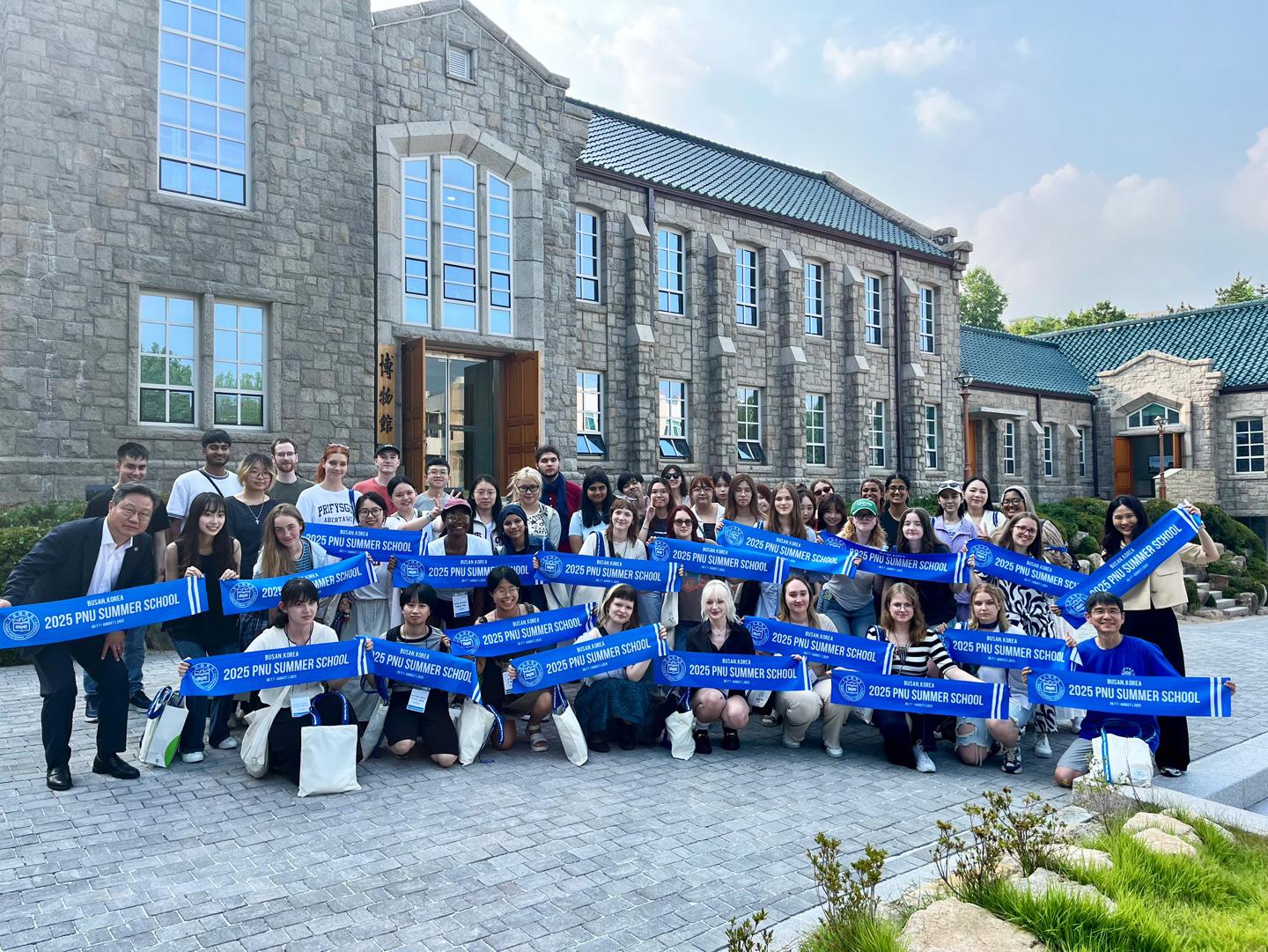
International students participating in Pusan National University’s Summer School pose with a banner in front of a university building in Busan in July 2025. Photo credit: Pusan National University.
The broader approach is intended to assess whether universities have created an environment where students from various backgrounds can successfully continue their studies. It goes beyond simply measuring how many international students a university recruits.
Experts described the changes to the rankings framework as a meaningful improvement while maintaining continuity with last year’s inaugural assessment.
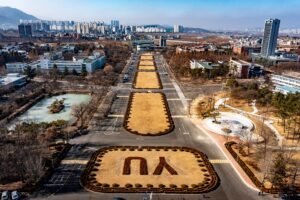
A view of Yeungnam University’s campus in Gyeongsan, North Gyeongsang Province. Photo credit: Yeungnam University.
“This year’s rankings showed progress in several areas, particularly with the addition of indicators measuring the ratio of international full-time faculty and international student retention rate,” said Shin Jang-sup, a professor of economics at the National University of Singapore, according to The Korea Times.
“The move to strengthen the evaluation framework for international students is also a positive step,” he added.
The results also show that a university’s overall position does not necessarily reflect its performance across every area of internationalization. For prospective international students, the rankings provide an opportunity to compare universities based on specific aspects of education and campus life that are relevant to their individual needs.
The growing interest among Kazakh students comes as Kazakhstan and South Korea deepen cooperation in higher education and research. In August, Science and Higher Education Minister Sayasat Nurbek met with university leaders and government officials in Seoul to discuss academic partnerships, joint research, faculty and student exchanges, and workforce development.
