
ASTANA – Kazakhstan’s cashless economy is entering a new stage as virtual cards become more common among active users and QR payments overtake bank cards at point-of-sale terminals. The shift suggests that digitalization is no longer simply about replacing cash with cards, but increasingly about replacing the physical card itself with a smartphone-based payment interface.
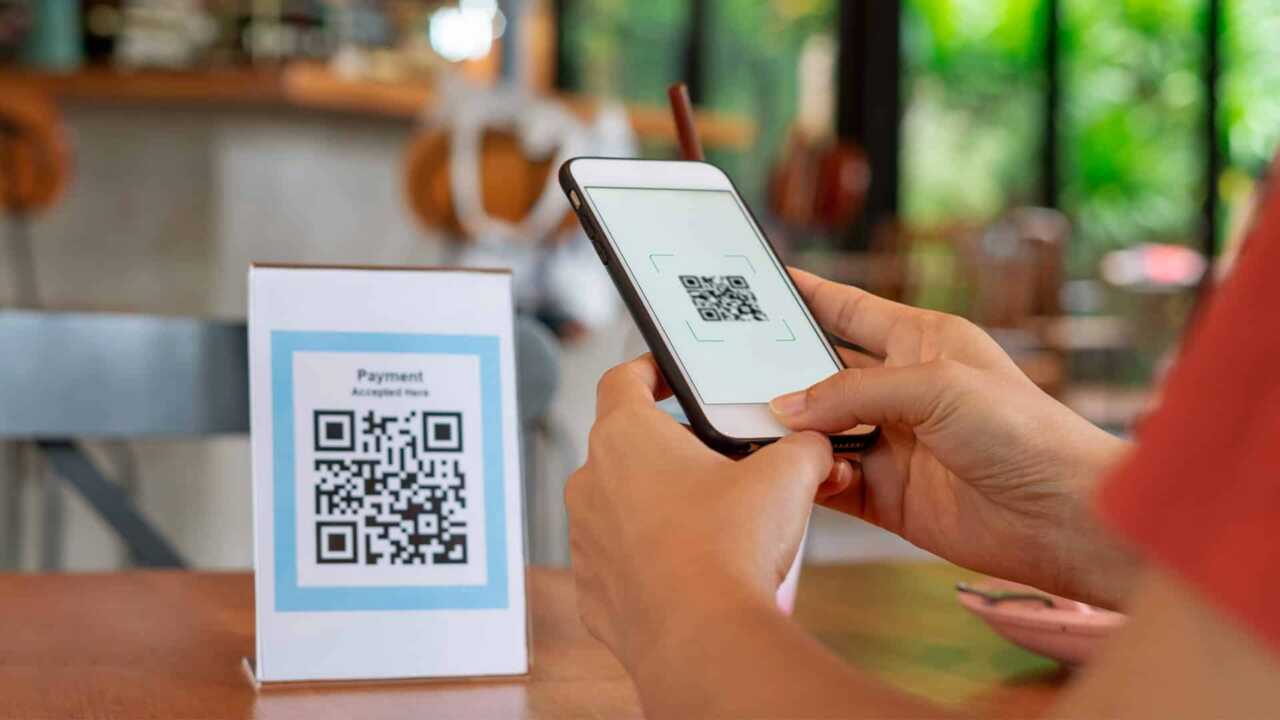
Photo credit: Shutterstock
According to payment card statistics updated by the National Bank on July 31, Kazakhstan had 83.6 million payment cards in circulation as of July 1. However, only 41.9 million cards were actively used, or about half of the total. Among active cards, virtual cards accounted for 53%, compared with 47% for physical cards. That means that, among cards that are actually being used, digital versions have already overtaken plastic.
The way consumers pay at retail outlets is changing at the same time. During the first half of 2026, QR payments accounted for 58% of transactions conducted through point-of-sale infrastructure, compared with 42% for bank cards. QR payments also accounted for 53% of transaction value, compared with 47% for card payments. The number of QR transactions was 38% higher than card transactions through POS terminals, while their total value was 13% higher.
On average, Kazakh citizens made around 11 million QR payments worth 57.3 billion tenge (US$122 million) every day during the first half of the year. Card payments through POS terminals averaged about eight million transactions worth 50.8 billion tenge (US$108 million) per day. The difference is particularly visible in the average transaction size. A QR payment averaged 5,200 tenge (US$11), compared with 6,400 tenge (US$14) for a card payment through a POS terminal, suggesting QR is becoming especially prominent for routine, lower-value purchases.
From cashless to cardless
The broader trend is visible in the National Bank’s payment statistics. In June 2026, internet and mobile banking accounted for 79.5% of non-cash transactions by number and 90.2% by value. In the first half of 2026, Kazakhstan recorded around 7.1 billion cashless transactions worth 92.1 trillion tenge — data that points to the growing role of digital channels in everyday payments.
According to Ruslan Sultanov, author of Tengenomika, an analytical channel covering Kazakhstan’s macroeconomy, the tenge exchange rate and broader economic issues, the figures mark a new stage in the country’s payment digitalization.
“Earlier, the key change was the shift from cash to bank cards. Now the cashless payment itself is changing, as the physical payment instrument increasingly gives way to a digital interface,” Sultanov said.
For banks, this also changes the logic of competition. Kazakhstan has 83.6 million cards in circulation, but only about half are actively used. As Sultanov notes, the number of cards issued therefore says less about a bank’s relationship with its customers than which banking product becomes a customer’s primary one, which application they use for everyday transactions and where their payment activity is concentrated. Virtual cards can further lower the barrier to competition. Customers no longer necessarily need a physical card to use a banking product. This makes it easier to hold products from several banks, while competition increasingly moves from the physical wallet into the smartphone.
Competition moves to the smartphone
The shift also changes the infrastructure businesses use to accept cashless payments. The traditional combination of a plastic card and POS terminal is no longer the only familiar interface for a digital payment. For consumers, the change is even more visible: the bank account remains, and the card can still exist as a payment instrument, but the physical card is increasingly unnecessary at the moment of purchase.
The trend is also consistent with Kazakhstan’s broader push to build a more interoperable digital financial system. In July 2026, the country launched the nationwide Interbank Mobile Payment System, allowing customers of participating banks to make transfers by phone number and pay through a single interoperable QR code regardless of which bank they and the merchant use.
What QR means for everyday payments
The growth of QR payments does not mean bank cards are disappearing. Instead, it shows that the payment process is becoming increasingly detached from the physical card. For consumers, the change may be barely noticeable: the money remains in a bank account, while the smartphone becomes the interface through which they access and spend it. For merchants, meanwhile, QR payments provide an alternative to the traditional card-and-POS model.
Sultanov also cautions that the latest figures should not be interpreted as a complete replacement of card payments by QR. Rather, they point to a broader structural shift in which the payment itself is becoming less dependent on a physical carrier.
For banks, the main asset is increasingly the digital contact with the customer, the application through which people access their money, choose how to pay and conduct everyday transactions. Kazakhstan’s payment market is therefore moving beyond the familiar idea of a “cashless economy.” The more significant transformation may be toward a cardless economy, where the payment instrument remains digital, and the physical card becomes optional.
