
ASTANA – Astana and Almaty have placed among the world’s 300 highest-ranked cities in the 2026 Global Cities Index by Oxford Economics, with both Kazakhstan’s major urban centers showing their strongest performance in human capital. Almaty ranked 265th globally and Astana 281st among 1,000 cities assessed by the international economic research firm.
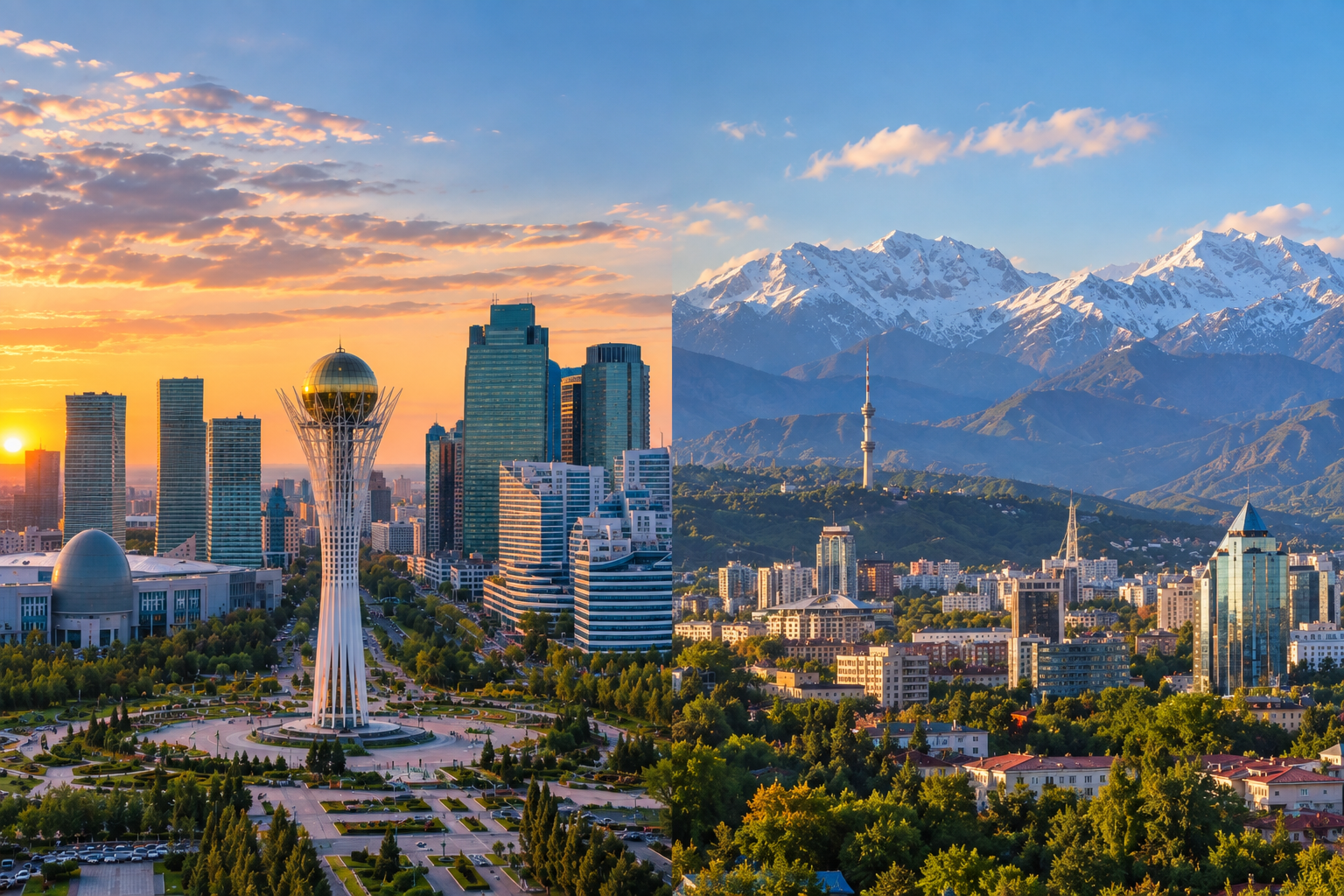
Photo credit: AI-generated image/ The Astana Times
Kazakhstan’s cities in the global ranking
Almaty ranked higher overall at 265th, while Astana placed 281st. The index evaluates cities across five categories: Economics, Human Capital, Quality of Life, Environment and Governance.
Almaty’s strongest result came in Human Capital, where it ranked 66th globally. Astana also entered the global top 100 in the category, ranking 98th.
The two cities’ category profiles show different strengths. Almaty ranked 288th in Economics and 269th in Quality of Life, while Astana ranked 264th and 360th, respectively. In Environment, Almaty was 845th and Astana 630th. Both received the same Governance rank of 622nd.
Oxford Economics defines Human Capital through indicators including population growth, age profile, universities, corporate headquarters, educational attainment and the share of foreign-born residents.
Human capital as a source of growth
The report emphasizes the relationship between human capital and economic development. According to Oxford Economics, cities that move into higher-value sectors can attract and retain skilled workers, while strong industries encourage investment in education and skills.
“The end result is an increase in the stock of human capital, which further incentivises investment, accelerating economic growth further still,” the report said.
This dynamic is increasingly important as the global urban economy changes. Oxford Economics notes that many cities in Asia and the Middle East are gaining ground by expanding labor markets and moving into technology, advanced manufacturing and financial and business services.
The report also identifies Astana as a Regional Leader, an archetype comprising important cities that are significant within their regions and tend to outperform their respective countries on indicators such as economic growth and income per person.
A changing global urban landscape
The 2026 index places New York first, followed by London and Paris. Seattle, San Francisco, Dublin, Boston, San Jose, Tokyo and Zurich complete the top 10. The report says North American and European cities still dominate the top positions, but the global economic landscape is becoming increasingly multipolar.
Asia is central to this shift. Oxford Economics expects cities across Asia Pacific and the Middle East to record significant gains in the coming years as economic growth improves living standards and quality of life.
For Kazakhstan, the results put Almaty and Astana firmly within the global top 300, while their relatively strong human capital rankings highlight the role of education, skills, labor markets and demographic factors in their position among the world’s major urban economies.
