
TASHKENT – Islamic finance is emerging as a potential new channel for connecting Central Asia with global capital, as Uzbekistan works to build regulatory and market infrastructure for Sharia-compliant investment. Speaking at the Silk Road Finance & Technology Forum in Tashkent on Aug. 26, Central Bank of Uzbekistan Governor Timur Ishmetov outlined Uzbekistan’s efforts to develop Islamic microfinance, banking and capital markets as part of a broader strategy to diversify the financial system and attract international investment.
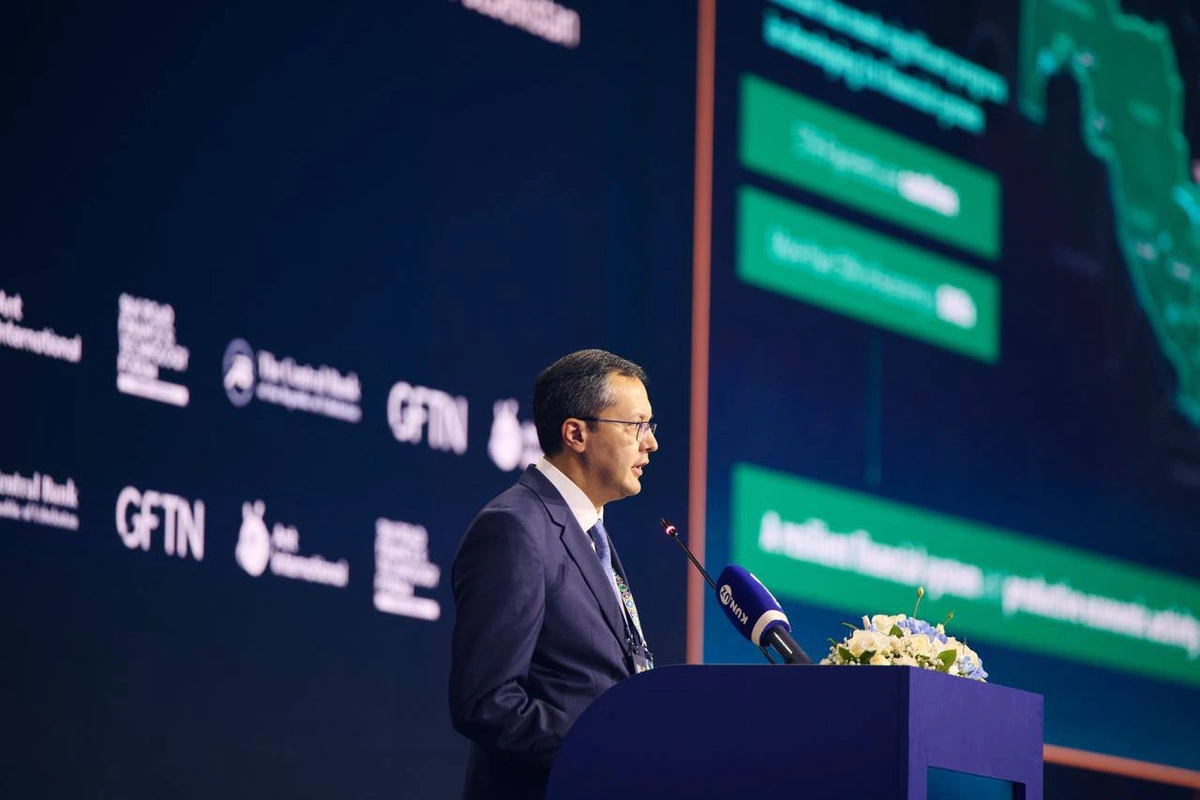
Central Bank of Uzbekistan Governor Timur Ishmetov. Photo credit: Central Bank
The initiative comes as Central Asian countries seek to strengthen financial connectivity with markets beyond the region and develop new investment channels. Uzbekistan is positioning Islamic finance as one component of this emerging financial architecture, alongside fintech, digital payments, cross-border finance and capital-market development.
Speaking at the forum, Ishmetov said Uzbekistan is developing its approach to Islamic finance in stages, covering microfinance, banking and capital markets.
From Islamic microfinance to banking
According to Ishmetov, Uzbekistan has already established the first layer of its Islamic finance infrastructure through Islamic microfinance.
Twelve microfinance organizations currently provide Islamic financial services based on contracts including Murabaha, Ijara, Salam, Mudaraba and Musharakah.
The second stage began with the adoption of a law on Islamic banking on June 29, which established a legal framework for Islamic banking activities in Uzbekistan. The legislation allows both fully fledged Islamic banks and Islamic banking windows within conventional banks to operate under dedicated Islamic banking licenses.
“Furthermore, the two-tier Islamic finance governance framework has been traditioned in accordance with the best industrial practices, including the establishment of a central bank Islamic finance board and Islamic finance boards within conventional banks,” Ishmetov said.
“One of the key challenges in the development of Islamic finance is ensuring neutrality in taxation of conventional and Islamic financial transactions,” he added.
He noted that the new legislation introduced a dedicated taxation regime designed to provide neutrality in areas including value-added and income taxes, alongside relevant exemptions from state duties.
Next step: Islamic capital markets
The third stage of Uzbekistan’s strategy is developing an Islamic capital market. According to Ishmetov, a draft capital markets law includes a dedicated chapter on Sukuk, or Islamic bonds, and had recently been approved by the Legislative Chamber of Parliament at first reading.
Ishmetov said Uzbekistan has also developed a 2026–2030 roadmap for the national Islamic finance industry in cooperation with the Islamic Financial Services Board. The Cabinet of Ministers approved the roadmap, which includes 39 measures across five thematic areas.
“Accordingly, over the coming years, our efforts will focus on further strengthening the legal and regulatory framework, developing human capital and enhancing public awareness, deepening international cooperation, facilitating the start of Islamic banking operations, building supporting infrastructure for Islamic finance and other priorities,” he said.
FinTech as an enabler
Ishmetov also linked the development of Islamic finance to the country’s broader digital transformation.
“We see FinTech as an important enabler of Islamic finance as an overall ecosystem and one of the key drivers for innovation, investment and productive economic activity,” he said.
Digital financial services, he added, can improve efficiency and transparency while enabling financial products to be delivered at greater scale.
“In this new era of digital economy, we believe that provision of financial services, including Islamic financial services, through digital channels will play an increasingly important role in creating new opportunities for innovation, investment and economic development,” Ishmetov said.
This intersection between Islamic finance and financial technology was one of the broader themes of the Tashkent forum, which also examined digital payments, artificial intelligence, tokenization, digital assets and cross-border financial infrastructure.
For Central Asia, the development of Islamic finance could provide an additional connection to capital markets in the Gulf, Türkiye and South and Southeast Asia. Uzbekistan’s emerging regulatory framework could therefore serve not only domestic borrowers and investors, but also support wider regional financial integration.
